

ELD trucking compliance is about more than installing a device in the cab. It is the process of using approved electronic logging technology, accurate driver records, and clear fleet procedures to meet hours-of-service rules and support safer operations.
Carriers, owner-operators, and fleet managers can benefit from knowing how ELD rules work. This knowledge can help clear up confusion during inspections and make daily dispatch choices more dependable.
ELD trucking compliance generally requires covered commercial drivers to use an electronic logging device that records hours-of-service activity and can provide required records during a roadside inspection.
The Federal Motor Carrier Safety Administration says that an ELD connects to a vehicle’s engine. It automatically tracks driving time. This helps make it easier to record, manage, and share duty status.
The ELD rule does not change the underlying hours-of-service limits; it changes how covered drivers record and present that information. (fmcsa.dot.gov)
In practical terms, compliance depends on three things working together: the technology, the driver’s daily use of that technology, and the carrier’s back-office review process. A compliant device can still create problems if drivers are not trained, unassigned drive time is ignored, or records are not retained properly. Likewise, a fleet with strong policies can still face violations if it uses an ELD device for trucks that is not registered or is no longer accepted.
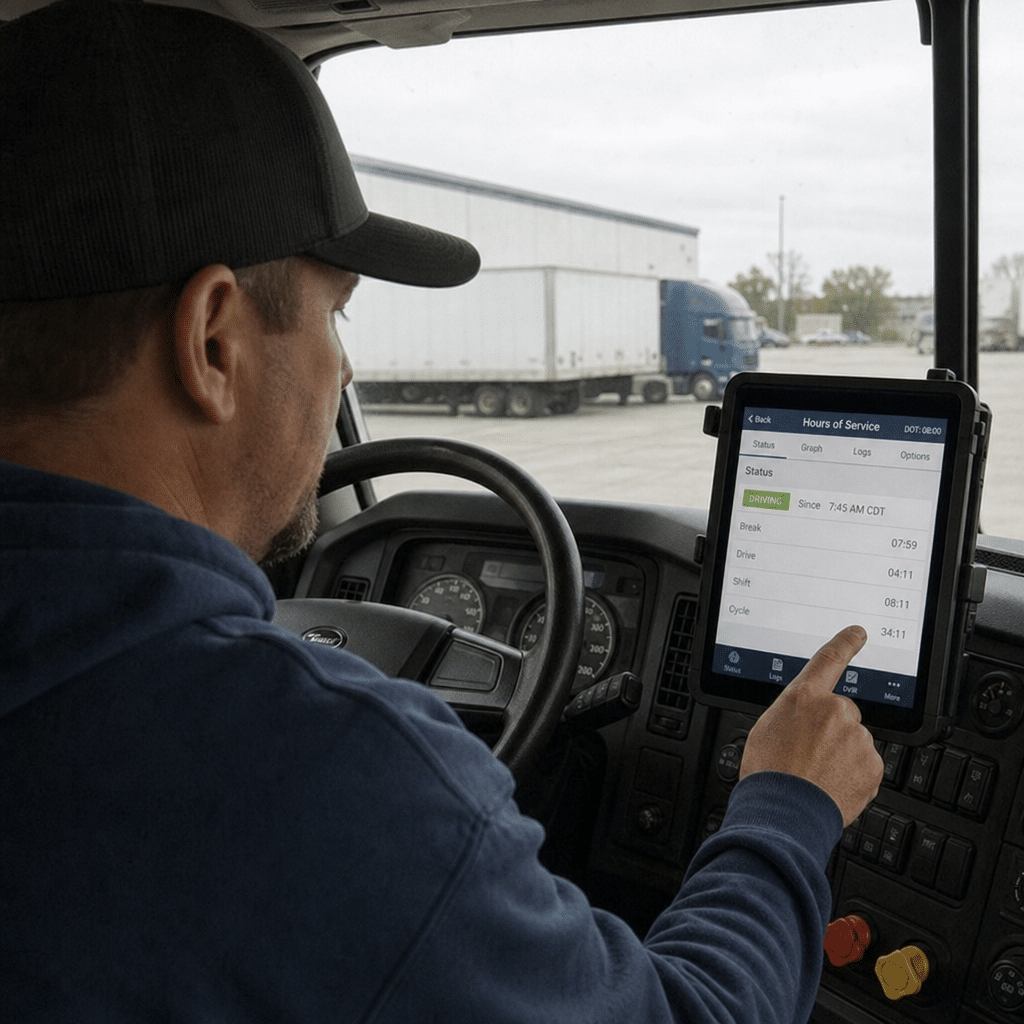
An electronic logging device for trucks helps create a more consistent record of when a driver is driving, on duty, off duty, or in the sleeper berth. Because the device captures driving time automatically, it reduces the risk of missing drive events and gives dispatchers a clearer view of remaining hours before assigning the next load.
That visibility matters for fleet safety. When managers can see available hours earlier, they can plan routes, delivery windows, fueling, and rest breaks with fewer last-minute decisions. Drivers also benefit when expectations are based on real available time rather than guesswork. In a well-run program, trucking ELD data is not used only after something goes wrong; it is used to prevent unrealistic schedules from being created in the first place.
ELD data can also support better conversations between safety teams and drivers. For example, repeated edits, frequent diagnostic events, or recurring personal conveyance questions may show where additional training is needed. The goal is not to micromanage every minute, but to make compliance easier to understand and easier to document.
The most important dot requirements around ELD use focus on having the right device, the right records, and the right information available when requested. FMCSA says motor carriers are responsible for checking that their device is registered and for periodically checking both the registration and revocation lists. A motor carrier using a device that is not on the registered list can be cited for violating the ELD rule. (fmcsa.dot.gov)
A driver using an ELD must also have an information packet available in the commercial motor vehicle. FMCSA lists required materials such as a user manual, instructions for transferring hours-of-service records to an authorized safety official, malfunction reporting instructions, and enough blank records of duty status graph-grids to record at least eight days. These materials may be available electronically, but drivers still need to know how to access them quickly. (fmcsa.dot.gov)
A practical compliance checklist includes:
These steps are simple, but they require consistency. Many compliance problems begin when a fleet treats the ELD as a one-time installation instead of an ongoing operating process.
ELD devices support fleet safety by making hours-of-service limits more visible, reducing manual logging errors, and helping carriers identify fatigue-related risks before they become bigger problems. FMCSA describes the ELD rule as intended to help create a safer work environment for drivers while making records easier and faster to track and share. (fmcsa.dot.gov)
For safety teams, electronic logging devices for trucks can reveal patterns that paper logs often hide. A driver may be legally compliant but still operating on tight schedules day after day. A route may regularly leave too little margin for traffic or loading delays. A terminal may have recurring unassigned drive time because drivers are moving trucks without logging in properly. These are operational clues, not just compliance data points.
Strong fleets use ELD information to improve planning. They look at detention time, recurring delay points, available hours, and driver feedback together. When that data is reviewed with context, it can help managers adjust routes, coach drivers, and reduce pressure that can lead to unsafe decisions.
Selecting an eld device for trucks should involve more than comparing screens or monthly costs. A fleet should consider how the system handles inspections, data transfer, driver usability, maintenance workflows, and support. FMCSA notes that some ELDs rely on cellular connectivity, so carriers should consider where they operate and whether drivers can connect reliably in remote areas. (eld.fmcsa.dot.gov)
A good system should make compliance tasks clear for both drivers and office staff. Drivers need a simple interface that helps them avoid mistakes. Managers need dashboards that make exceptions easy to find and resolve. If the system is confusing, teams may technically have electronic records but still struggle to stay inspection-ready.
When evaluating ELD solutions for commercial fleets, look for features and workflows that support daily operations, not just minimum compliance. The best fit is usually the solution your drivers can use correctly, your office can manage consistently, and your safety team can rely on when reviewing records.
Many ELD violations are preventable. They often happen because the fleet has not built routine habits around the technology. The device records activity, but people still need to review, correct, certify, and explain records properly.
Watch for these common issues:
The best prevention is a recurring review process. Set a schedule for log audits, device status checks, driver refreshers, and policy updates. Short, regular reviews are usually more effective than waiting for an inspection, crash, or audit to reveal gaps.
When an ELD malfunctions, the driver should report the issue promptly and use the required backup process if the device can no longer accurately record or present hours-of-service data. FMCSA guidance says the driver must inform the carrier within 24 hours, and the motor carrier generally has eight days to repair, service, or replace the ELD. If the malfunction prevents accurate HOS recording, the driver must use paper logs or another acceptable method during that period. (eld.fmcsa.dot.gov)
Drivers should also know where to find malfunction instructions before a problem occurs. During a stressful roadside situation, it is much harder to search for procedures or remember exact steps. Carriers can reduce confusion by including malfunction training in onboarding and refresher programs.
A simple malfunction response plan should include:
This plan protects both the driver and the carrier. It shows that the fleet understands the rule and has a practical process for keeping records accurate when technology fails.
ELD compliance works best when it is built into everyday fleet operations. Dispatchers should understand hours availability before assigning loads. Drivers should feel comfortable asking questions about edits or duty status. Safety managers should review patterns instead of only reacting to violations.
Communication is especially important. If drivers believe the ELD is only a surveillance tool, they may resist it or use it defensively. If they understand that accurate logs protect their time, support safer scheduling, and reduce inspection risk, adoption becomes easier. Managers set the tone by using data fairly, explaining decisions, and avoiding pressure that conflicts with safe operations.
The strongest programs also document expectations clearly. Written policies do not need to be complicated, but they should be specific enough to guide real situations. Cover log certification, edits, unassigned driving, personal conveyance, yard moves, malfunctions, and inspection procedures. Then revisit those policies whenever operations change.
ELD trucking regulations are designed to make hours-of-service records more accurate, accessible, and consistent. Compliance depends on using registered technology, training drivers, reviewing records, preparing for inspections, and responding correctly when problems occur.
For fleets, the real value goes beyond avoiding citations. A well-managed ELD program supports fleet safety, improves planning, and gives drivers and managers a shared view of available hours. When electronic logging becomes part of the operating culture, compliance becomes less of a burden and more of a daily safety tool.