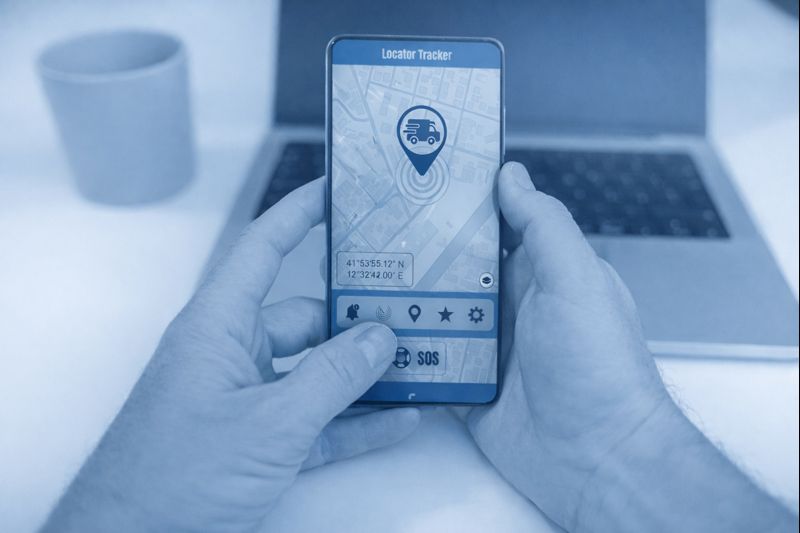
A GPS trailer tracker turns guesswork into clear decisions. You stop calling drivers for updates.
You stop walking yards with clipboards. You stop losing hours to “Where is that trailer?” chaos. You get real-time tracking, clear location updates, and instant alerts. These alerts tell you when a trailer moves, stops, or crosses a boundary you set.
This guide breaks down what matters most: geofencing, theft recovery, and detention visibility. You will also learn how to choose the right trailer GPS tracking device for your lanes, yards, and budget.
Every fleet fights the same problems, just at different scales.
First, trailers disappear in plain sight. They sit at customer sites, drop yards, and repair shops. A dispatcher asks for a unit. Nobody knows the precise location.
You lose time. You lose revenue. You also lose your customer’s trust.
Second, theft happens fast. A thief does not need hours. They need minutes.
If you rely on “someone will notice,” you will notice too late. Tracking systems give you speed. Speed wins.
Third, detention eats margin. Detention also triggers arguments. A shipper claims one timeline. You claim another. A GPS trailer tracker provides data you can share and defend.
A good tracker supports fleet management and boosts working efficiency. It also gives you real peace of mind. You know where your assets sit and when they move.
A geofence sounds simple. You draw a virtual boundary. The system sends alerts when an asset enters or exits. In practice, the setup decides the value.
Do not create alert noise. If you spam your team, they will ignore the system. Use these rules:
This approach keeps your gps trackers useful. Your team acts on alerts. They do not mute them.
Theft recovery starts before theft. You need the right device, the right install, and the right response steps.
Some fleets want stealth. Others want speed of installation. Many want both.
A trailer GPS tracking device can hide inside a tail light, a toolbox, or a sealed enclosure. Stealth matters because thieves often search for an exposed gps device first.
If you want an “invisible” option, check out the tail light device in the FalconZoom shop. Compare it to your usual trailer setup: Tail Light GPS Tracker FZ200.
When the system sends an alert, do this in order:
A GPS trailer tracker often cuts hours off recovery time. Those hours protect freight and reduce downtime.
Detention arguments often start with one question: “When did you arrive?” A shipper might point to a gate log. You might point to a text message. Neither proves much.
A GPS trailer tracker gives you a stronger timeline:
This evidence supports fair billing and faster dispute resolution. It also helps operations:
You can even share simple updates with customers. A dispatcher can send a message based on accurate location tracking, not guesswork.
Not every trailer tracker fits every job. Pick based on how and where the trailer spends its time.
A smart buyer checks the data plan and support model. Hardware looks cheap until the monthly plan catches you off guard. Ask these questions:
A cost-effective plan often wins over a fancy device with a painful subscription.
Skip fluff. Focus on what changes outcomes:
If you need a starting point for options and plans, check out FalconZoom’s GPS tracking category. Compare devices by trailer type: GPS Trackers.
If you want results fast, do not start with the full fleet. Start with a pilot.
Week 1: Pick 10 to 25 trailers
Choose a mix. Include problem units and high-value units.
Week 2: Build fences and alert rules
Fence your yard, two customer sites, and one high-risk zone. Set alert rules that create action, not noise.
Week 3: Train dispatch and yard staff
Show them how to locate the precise location and retrieve timestamps for detention. Give them a simple checklist.
Week 4: Track three metrics
A GPS trailer tracker pays off when your team uses it every day. The platform will not fix operations on its own. Your workflow will.
A GPS trailer tracker helps you control what you cannot see. You obtain real-time tracking, fewer lost trailers, faster theft response, and stronger detention proof. You also improve operating capability across dispatch, yard work, and billing.
Select a trailer GPS tracking device that suits your dwell time, theft risk, and budget. Set smart geofences. Use instant alerts with clear rules. Then measure results and scale with confidence.