Picture this. You sit in the DMV waiting room with a number ticket in your hand. You rehearse the air brake steps in your head. You promise yourself you will not miss a single line in the pre-trip inspection. Your name gets called. You walk up, ready for the usual routine.
Then the clerk says, “English only.”
No translator. No alternate language version. No, picking a different option because your state used to offer it.
That moment captures what the U.S. Department of Transportation now wants across the country.
DOT leaders say every commercial driver should take CDL tests in English as part of a wider safety push. They argue that a driver can handle a modern truck, a crowded highway, and a roadside inspection only if they can read English road signs and communicate clearly with officers.
DOT points to a simple problem. Federal rules already require English proficiency for commercial drivers, but enforcement has varied from state to state. Some states have offered tests in multiple languages. Others have relied on third-party testing, which DOT says can open the door to weak standards and sloppy oversight.
DOT says this patchwork creates gaps. Drivers can slip through those gaps, get a CDL, and later struggle during inspections or emergencies when clear communication matters most.
The English-only change fits inside a broader crackdown. DOT has signaled that it wants to clean up the whole pipeline from driving school to CDL testing to carrier oversight.
In recent months, officials have talked about shutting down hundreds of driving schools tied to safety failures. They have also discussed tightening rules around school certification so programs cannot rubber-stamp training. On top of that, DOT has warned about problem carriers that shut down and restart under new names after serious violations. Those “chameleon” moves make it harder to track patterns and enforce accountability.
So while the headline focuses on language, DOT frames the bigger story as a safety and fraud fight.
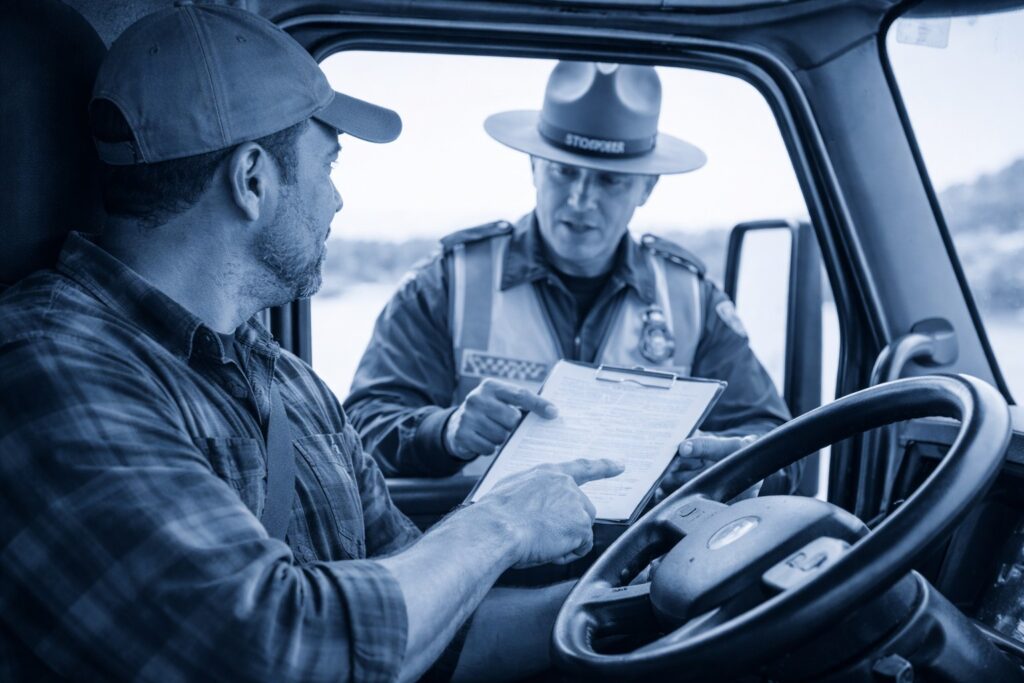
DOT also wants tougher real-world enforcement. Inspectors can check whether a driver can communicate in English during a stop. If the driver cannot, inspectors can place the driver out of service.
That matters because it shifts the pressure from the testing room to the highway. You can pass a test once, but you still need to communicate during inspections, weigh stations, crash scenes, and routine stops.
DOT officials have linked the crackdown to fatal crashes that sparked public attention and political heat. When tragedies happen, the industry does not just face grief and headlines. It also faces new rules, new enforcement, and new scrutiny of how drivers got licensed in the first place.
DOT’s message sounds familiar: the system has to prevent unqualified drivers from reaching the road, not just punish them after something goes wrong.
For fleets, this creates a new compliance checkpoint. Recruiting and onboarding now need an extra layer of verification. Safety teams need to confirm that drivers can handle English-based inspections, not just everyday dispatch conversations.
For drivers, the change raises the bar. Some drivers will need to study English more seriously before they test. Others will need refresher training so they can explain issues, answer questions, and follow instructions during inspections without confusion.
For CDL schools, the stakes rise too. Schools that train students without building real English competence may see more failures. Schools that take shortcuts risk greater scrutiny from regulators.
A single national rule can close loopholes and reduce inconsistent standards across states. It supports a basic safety expectation: a professional driver should read English road signs and communicate during inspections and emergencies. Stronger standards can also discourage fraud, improve training quality, and help the industry rebuild trust when the public questions safety.
An English-only system can push capable drivers out of the workforce, even when they drive safely and follow the rules. It can also tighten capacity in the short term if more drivers fail tests or get placed out of service during roadside checks. That can raise costs for fleets, add pressure to the driver pipeline, and create frustration if enforcement feels uneven or overly aggressive.